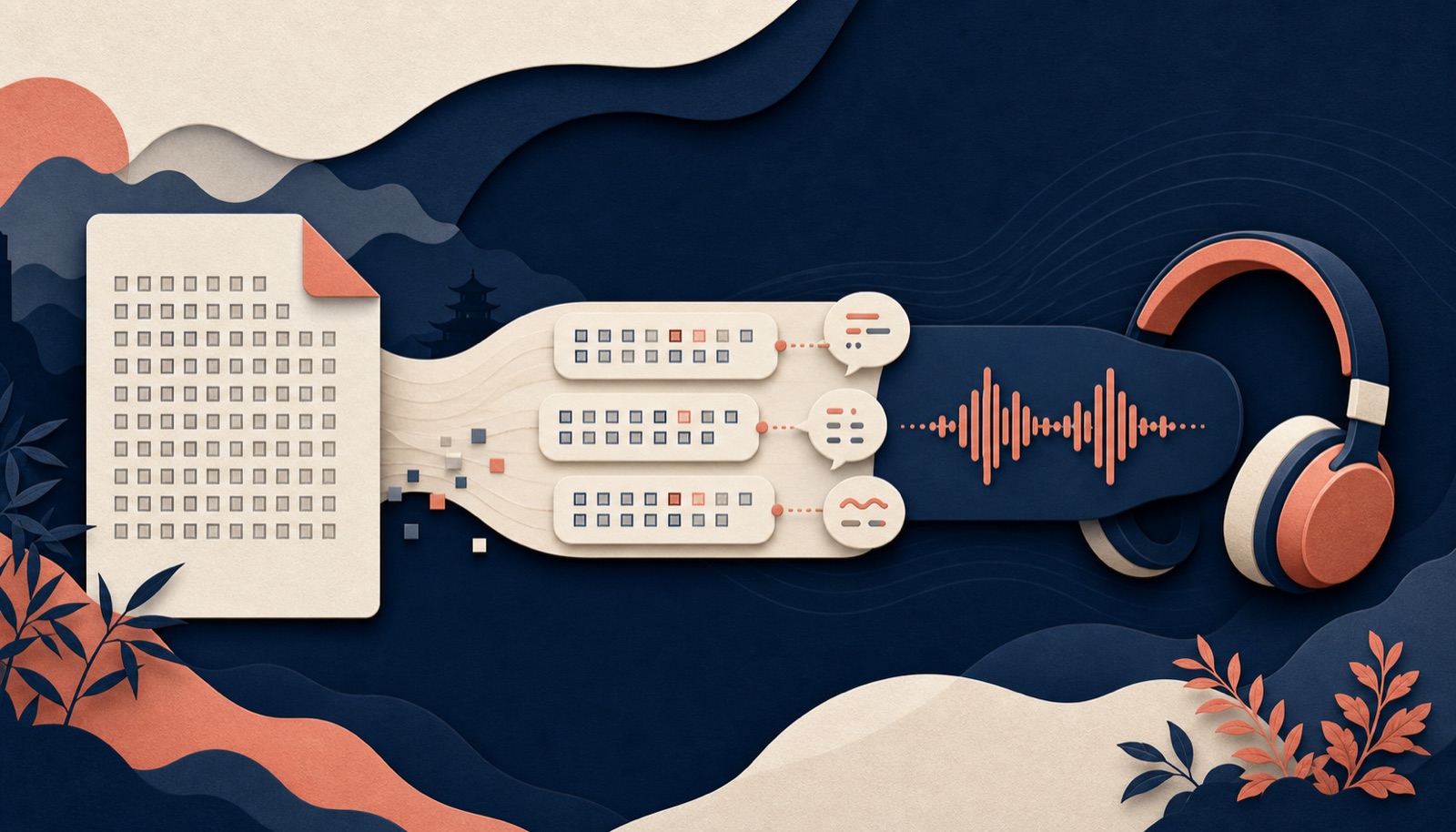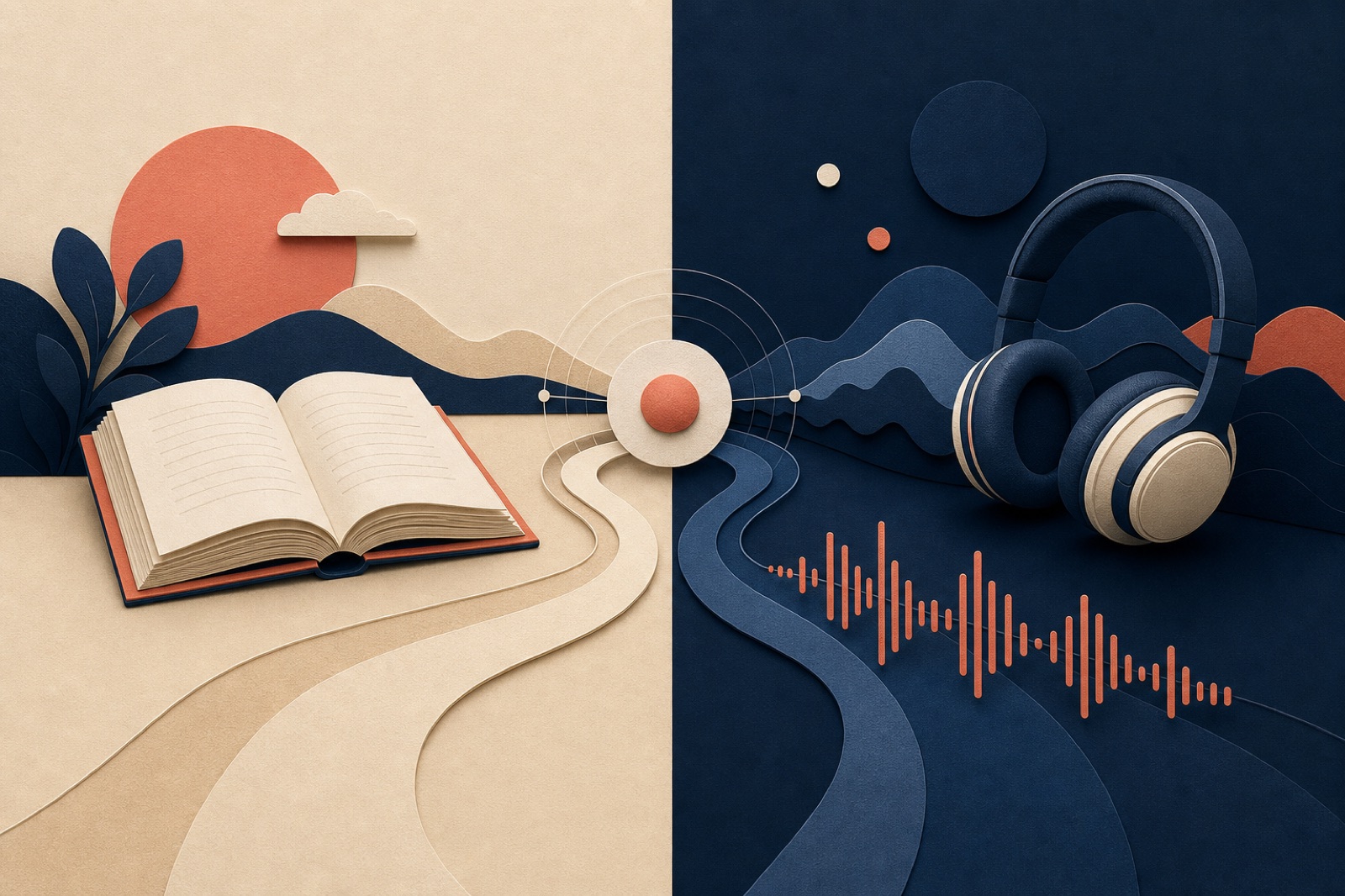
“Is listening as good as reading?” sounds like a simple comparison, but it bundles together very different tasks. Following a narrative while walking, checking a proof, learning pronunciation, scanning a table, and reviewing notes before an exam do not demand the same things from attention or memory.
The useful question is not which medium wins. It is which medium helps you perform the next cognitive action, under the conditions you actually have.
Avoid the learning-styles shortcut
People have preferences and accessibility needs, but that does not mean each person has a fixed “auditory” or “visual” learning style that should determine all instruction. A preference for podcasts is not evidence that equations will be learned best without seeing them. A preference for print is not evidence that pronunciation should be learned silently.
Choose based on content and task. Spoken language is naturally useful for pronunciation, rhythm, dialogue, and review during hands-busy time. Visual text is useful when you need exact spelling, spatial layout, rapid backtracking, or comparison across distant passages.
Research on listening comprehension and reading shows related language processes rather than two unrelated abilities. A review in Developmental Review describes listening comprehension as an important contributor to reading comprehension. That relationship does not make the modes interchangeable in every situation.
Use audio for orientation
Audio works well as a first map of unfamiliar material. An episode can identify the central question, define core terms, and show how sections connect. Once you know the terrain, a dense document becomes easier to navigate.
Orientation is especially useful when the alternative is no engagement at all: during a commute, walk, meal preparation, or other low-risk routine. The goal is not to master every detail. It is to arrive at the next reading session knowing what deserves attention.
At the end of an orientation pass, write or say:
- the main question;
- three important ideas;
- one confusing point;
- one location to inspect in the source.
If you cannot do that, replaying the entire episode may not help. Slow down, shorten the material, or switch to text.
Use reading for precision and navigation
Text gives you control over pace at the word and symbol level. You can compare two definitions, scan headings, inspect a footnote, and jump between a claim and its table. That makes reading the default for:
- equations and formal proofs;
- code and command syntax;
- contracts and policy language;
- dense tables, maps, and diagrams;
- close quotation and citation;
- unfamiliar names or terminology;
- tasks where a small transcription error has high cost.
Reading is not automatically deep. Skimming without questions can be as passive as letting audio play in the background. The medium creates affordances; the learner still needs a task.
Use audio for explanation and rehearsal
A conversational explanation can surface questions that formal prose leaves implicit. One host can define a mechanism while another tests it with an example. This makes audio useful for causal stories, conceptual distinctions, historical sequences, and review.
Audio also supports repeated rehearsal without requiring the same physical setting. A short recap played on separate days may be more practical than reopening a report. But repetition alone is not retrieval practice. Pause before an answer and try to produce it. Summarize a section without listening. Predict the next step in an argument.
The active step matters more than whether the voice is human or synthetic.
Match complexity to listening conditions
Listening while sitting in a quiet room is different from listening while changing trains. Movement, announcements, navigation, and safety decisions compete for attention. Do not schedule dense new material for conditions where missing one sentence breaks the chain.
Classify an episode:
- Light: narrative, overview, familiar review.
- Moderate: explanatory material with a few terms and examples.
- Dense: methods, numbers, qualifications, or interdependent steps.
Use light material during variable attention. Save dense material for a quiet walk, seated session, or transcript-assisted review. Never use study audio while driving if it distracts from safe operation.
Playback speed is also task-dependent. Faster playback may be comfortable for familiar review but costly for names, numbers, or a second language. The fastest speed you can follow is not necessarily the speed at which you can evaluate.
Combine modes in a deliberate sequence
An effective sequence for a difficult document is:
- Preview the text: read title, abstract, headings, and conclusion.
- Listen for structure: follow an audio explanation without chasing every detail.
- Return to visuals: inspect tables, figures, formulas, and cited passages.
- Retrieve: explain the argument from memory or answer questions.
- Correct: compare your explanation with the source and transcript.
Another sequence starts with close reading and uses audio later for review. That works well when the first encounter requires precision but subsequent repetition can be mobile.
The sequence should end with observable performance: solving a problem, explaining a method, making a decision, or locating evidence. “I finished the episode” is a consumption metric, not a learning outcome.
Preserve transcripts and visual anchors
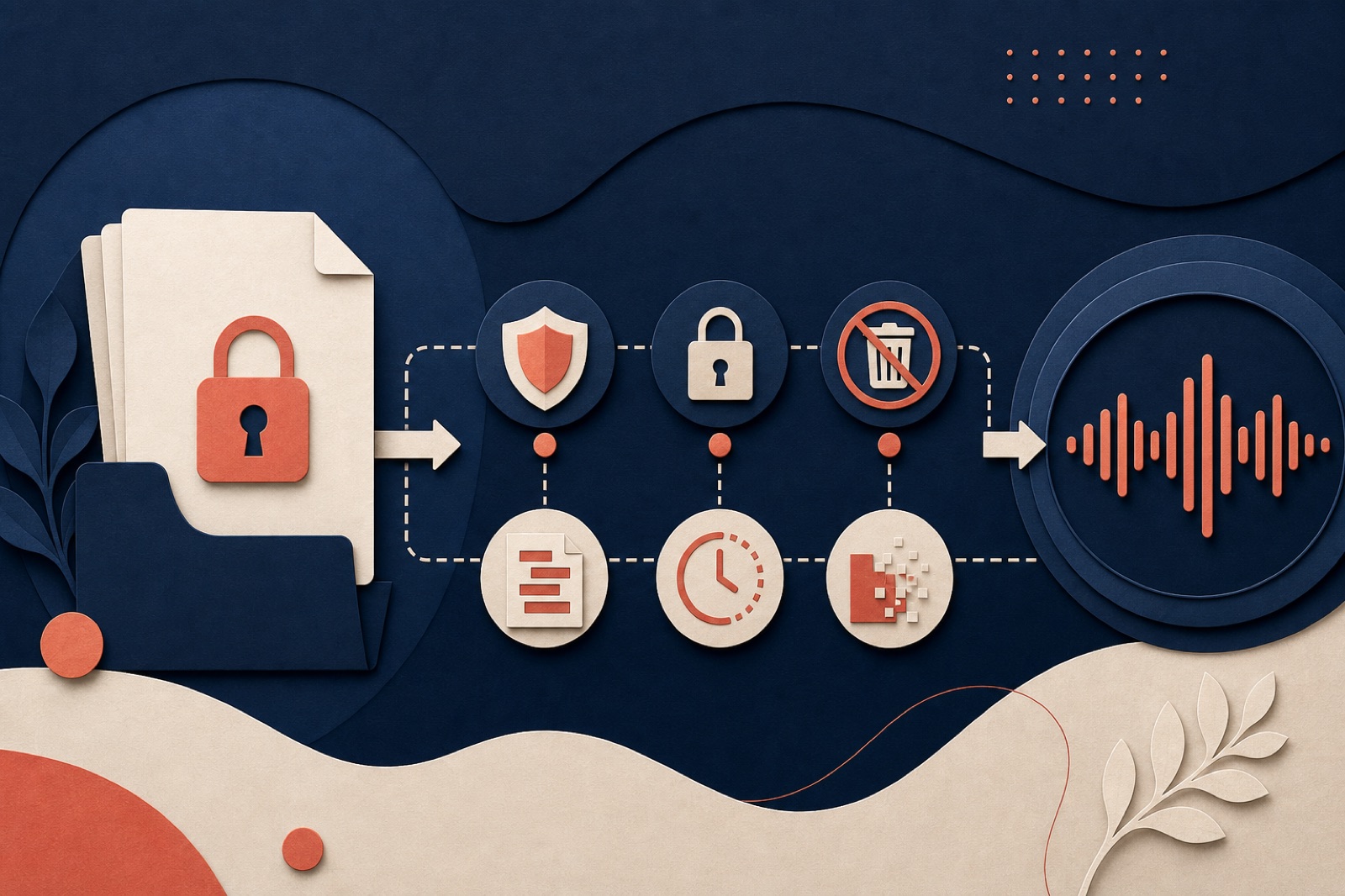
Audio should not trap information in a timeline. Keep a searchable transcript with speaker labels and chapter markers. Link to the original source. For important visuals, state a page or figure number in the audio and include a description in the transcript.
W3C’s media accessibility guidance recommends text alternatives for audio and emphasizes that different people need different access paths. Even when the audio is itself an alternative to a document, a transcript makes correction, search, translation, and quotation easier.
If you publish audio publicly, check the final transcript against what was actually spoken. A generation script is not necessarily an accurate transcript after edits.
Test comprehension instead of trusting fluency
Well-produced audio feels easy to understand. That feeling can hide missing details. Use a small test after each section:
- What was the claim?
- What evidence supported it?
- What qualification narrowed it?
- Could I give a new example?
- What would I need to look up before acting?
If answers are vague, try pausing more often, reducing episode length, lowering playback speed, or reading the relevant section. If text produces the same problem, the issue may be background knowledge or source quality rather than medium.
For research papers, the listening workflow adds method and figure checks. For any source-derived episode, trace material claims back to their passages so conversational fluency does not widen them.
Account for language and accessibility
Listening may provide access when visual reading is tiring or unavailable, and text may provide access when hearing audio is difficult. Some people need captions, transcripts, adjustable speed, keyboard controls, or screen-reader compatible text. Treat these as core formats, not afterthoughts.
Second-language learners may benefit from hearing pronunciation while following the original text. Keep the transcript visible, slow down unfamiliar passages, and repeat meaningful phrases rather than isolated words. For Chinese content, tone, segmentation, names, and mixed English terms make source and voice review especially important.
Use a task-based decision rule
Choose audio when:
- the goal is orientation, explanation, pronunciation, or review;
- the content is mainly verbal and sequential;
- the listening environment is safe and attention is sufficient;
- a transcript and source remain available.
Choose text when:
- exact wording, notation, layout, or visual comparison matters;
- you need rapid search and backtracking;
- the decision is high stakes;
- listening conditions are distracting.
Combine them when the material is important enough to deserve both overview and inspection.
DuoCast can create a two-host audio version of a prepared document, but it cannot decide the learning task for you. Define what success looks like, pick the medium that supports it, and test what you can do afterward.
Audio is not a shortcut around thought, and reading is not proof of depth. Both are interfaces to ideas. The better interface is the one that helps you question, retrieve, verify, and use those ideas in the moment that matters.